JW Real Estate Coaching • Tallahassee, Florida

Florida's Authority Coach
for Real Estate Agents

45 years. 11,000+ transactions. One framework that builds careers from the first day of your license through every production level beyond it.

Re/Max Hall of Fame
#1 Tallahassee Board of Realtors
Top 20 in Florida, 5 Years
FL License SL577656
John Whetsel, JW Real Estate Coaching
John Whetsel
45
Years in Real Estate
11,000+
Transactions Closed
Top 20
Florida, 5 Years
4
States Licensed
$12M
Built at Killearn
200
Person Sales Force Led
Find yourself here

If Any of This Sounds Like Where You Are Right Now

The New Agent

You just got your license

You are confident in your values and your work ethic but you have never sold real estate before. The industry told you to prospect and close. Nobody told you how. That gap is exactly what this program closes.

The Struggling Agent

You have been at it 6 to 18 months

You have worked hard. You have not produced what you expected. You are starting to wonder if real estate is right for you when the actual problem is that you were never given a system. What you are missing is structure, not effort.

The Plateaued Producer

You are closing but not building

Every year looks like the last one because you are executing instincts rather than a defined framework. You know there is more available. You need the architecture to reach it.

"Every agent needs a coach in their corner."John Whetsel, JW Real Estate Coaching
The coaching architecture

The Five Essentials Framework

Every coaching engagement is organized around this framework. Every element connects. Nothing is random. Click any essential to read John's complete explanation.

01
Transformation
The operating beliefs that determine whether everything else holds
Most training programs skip Transformation entirely because it is harder to teach than a script and slower to show results than a technique. But in 45 years of watching agents succeed and fail, I have never once seen an agent build something truly lasting without doing this work first. Transformation surfaces the assumptions you carry into this business, about selling, about clients, about what real estate actually requires, and examines them honestly. Some survive. Many do not. It then installs the professional identity, the personal commitments, and the clarity of purpose that determine whether every system and technique you build on top of it is sustainable or fragile when circumstances become genuinely difficult.

Transformation is where every coaching engagement I run begins, and it is the essential that most training programs skip entirely because it is harder to teach than a prospecting script and slower to produce visible results than a CMA template. But in 45 years of watching agents succeed and fail in this business, I have never once seen an agent build something truly lasting without doing this work first.

Transformation addresses the operating beliefs that determine whether everything that follows is sustainable or fragile. The agent who has not done this work enters the business with a collection of assumptions about selling, about clients, about what real estate actually requires, assumptions that were formed somewhere else and that frequently do not serve them here. The first thing I do in every new coaching relationship is surface those assumptions and examine them honestly. Some survive the examination. Many do not.

The professional identity question is at the center of Transformation: who are you in this business and why does that matter to the people you serve? Most agents answer this question with their production statistics, their brokerage affiliation, or a list of services they provide. None of those answers produce the depth of trust that a referral business runs on. The answer that produces trust is specific, personal, and rooted in genuine commitment to the client's outcome rather than to the agent's commission. Finding that answer is Transformation work.

I entered real estate at twenty years old in Florida with no track record, no database, and no money. What I had was a clear sense of why I was doing this work and what I was committed to providing every person who trusted me with one of the most significant decisions of their life. That clarity carried me through months when the income had not yet arrived. It is what made the difficult first year survivable and what made the decade that followed productive. I teach Transformation first because I know from direct experience that without it, every technique and system built on top of it is vulnerable to abandonment the first time circumstances become genuinely difficult.

The Transformation work I guide agents through covers the operating beliefs that shape behavior before any client conversation begins, the professional commitments that determine how you behave when a situation creates pressure to cut corners, and the personal clarity about your purpose in this business that sustains you through the months when the results have not yet caught up with the effort. This is not motivational content. It is the foundation that every other essential rests on, and in my experience it is the difference between agents who produce for a season and agents who build something that lasts.

02
Direction
The business plan that actually gets used every day
Most agents have written a business plan and filed it within a week of writing it. That is not a business plan. That is a document. Direction produces something genuinely different: a working operational guide that connects your specific income target to the specific daily activities required to reach it, updated weekly, used every day. The planning process works backward from income to transaction count to lead volume to daily contact activity. The result is not a goal. It is a daily prescription. The Friday review discipline is what turns this from theory into the tool that actually runs your week.

Direction is the business planning essential, and I want to be direct about what I mean by a business plan because most agents have had the experience of writing one and filing it away within a week of writing it. That is not a business plan. That is a document. Direction produces something genuinely different: a working operational guide that connects your specific income target to the specific daily activities required to reach it, updated weekly based on actual performance, and used every day as the primary tool for evaluating whether you are on track.

The Direction planning process I teach works backward from income to activity in four specific steps. First, establish the income target, not a round number chosen because it sounds ambitious, but a specific number tied to real financial obligations and genuine lifestyle goals. Second, calculate the transaction count required to reach that income based on realistic average commission per transaction in your specific Florida market segment. Third, identify the lead volume required to produce that transaction count based on your actual conversion rates at each stage of the pipeline. Fourth, determine the daily contact activity required to generate that lead volume. The result is not a goal. It is a daily prescription.

The discipline that makes this planning process genuinely useful rather than theoretically correct is the Friday review: comparing the week's actual activity against the prescription every Friday before you leave for the weekend. Not to judge yourself, but to calibrate. The agent who contacts forty-seven people in a week when the prescription says sixty does not need a lecture about effort. They need an honest conversation about what prevented the remaining thirteen contacts and what specifically will be different next week. That conversation, held consistently with yourself and with a coach who is paying attention, is what makes a business plan a living document rather than a filed aspiration.

Direction also addresses the market intelligence component of business planning that most coaching programs omit entirely. Understanding the specific supply and demand conditions in your target neighborhoods, knowing the current days-on-market patterns in your price range, tracking the list-to-sale price ratios that determine whether your pricing advice is accurate, this is not background information. It is the foundation of every client conversation you will have, and the agent who has done this analysis is visibly and immediately distinguishable from the agent who has not. In forty-five years and eleven thousand transactions in the Tallahassee market, I have never once seen consistent production come from an agent who was not genuinely engaged with the specific numbers of their specific market.

03
Ignition
The daily habits and weekly rhythms that create consistent lead flow
You do not ignite a fire by being motivated. You ignite it through specific, reliable conditions that produce a specific result every time. The habits I install in the Ignition phase are designed to work exactly that way, the morning prospecting block that runs before email and before any reactive work, the database architecture organized by relationship tier and last contact date, and the post-closing follow-up system that turns every transaction into a compounding referral stream for years afterward. These habits operate independently of mood, market conditions, and the current state of your pipeline.

Ignition is the installation of habits that operate independently of mood, market conditions, or the current state of your transaction pipeline. I chose the word ignition deliberately because of what it implies about the relationship between preparation and performance. You do not ignite a fire by being motivated. You ignite it through specific, reliable conditions that produce a specific result every time. The habits I install in the Ignition phase of every coaching engagement are designed to work the same way: reliably, repeatedly, regardless of whether you feel like doing them on any given morning.

The morning prospecting block is the non-negotiable core of the daily structure I install with every agent I coach. It happens at the same time every morning, before client calls, before email, before any reactive work enters the day. It is protected from interruption not because interruptions are inherently wrong but because the agent who allows the prospecting block to be interrupted is sending their own subconscious a message about the hierarchy of priorities in their practice. The prospecting block goes first because it is the activity that feeds everything else, and no amount of skill in the consultation room or at the negotiating table compensates for a pipeline that is not being consistently filled.

The database maintenance system that I install alongside the prospecting block is the infrastructure that turns daily contact activity into a compounding referral asset over time. Most agents treat their database as an address book. The agents who build genuinely productive referral businesses treat it as the most valuable asset in their practice, because it is. The architecture of the database matters as much as its size. Organizing contacts by relationship tier, tracking the last meaningful contact with each person, and maintaining a specific follow-up system for the people most likely to refer or transact in the next ninety days is the difference between a database that produces business and one that simply contains names.

The post-closing follow-up system is the Ignition habit that most new agents implement the least consistently and whose compounding effect is most dramatically underestimated. The closing table is not the finish line. It is the moment when the most referral-productive phase of the client relationship begins. A thirty-day check-in call, a ninety-day home value update, a first anniversary recognition, and a consistent quarterly touchpoint for the years that follow, this is a system that I have watched produce referral business for agents in my coaching relationships for decades after the original transaction. It runs because it is a habit, and habits run whether you remember to be motivated about them or not.

04
Traction
The conversion skills that turn consultations into signed agreements
Traction is the full conversion curriculum built from 45 years and 11,000 real transactions, not from theoretical sales frameworks. How to run a buyer consultation that produces a signed agreement. How to present a listing consultation that closes in the first meeting. How to structure an offer that wins, manage an inspection negotiation, navigate an appraisal gap, and keep a transaction on track through every stage of escrow. Each is a specific, learnable skill. The agent who has learned it before the transaction requires it stays calm when circumstances become difficult. Calm agents produce outcomes that anxious agents consistently fail to produce.

Traction is the full conversion curriculum, and I want to be specific about what I mean because the word conversion gets used loosely in real estate training to mean everything from getting a lead to sign a buyer agreement to persuading a reluctant seller to drop their price. In my coaching practice, Traction means something more precise: the specific, learnable skills that turn a qualified prospect into a committed client at every stage of the relationship, built from forty-five years and eleven thousand real transactions rather than from theoretical sales frameworks.

The buyer consultation conversion is where I start with every agent because it is the skill that directly determines whether the time invested in lead generation produces income. A buyer consultation that does not convert to a signed buyer agreement is a business conversation, not a business transaction. The consultation framework I teach is built around three phases: environment and relationship establishment, discovery and motivation surfacing, and commitment and next steps. Most agents rush to the third phase without completing the second, which is why most buyer consultations that do not convert fail in the discovery phase rather than the commitment phase. The buyer who has not been genuinely discovered is not ready to commit, and no amount of skill in presenting the buyer agreement overcomes that fundamental gap.

The listing consultation conversion is the skill that produces the most directly measurable difference in agent income because it is the skill that determines whether the investment in prospecting, marketing, and relationship-building produces a listing or a polite conversation with someone who lists with someone else. The listing consultation I teach begins before the appointment with specific market preparation, continues through a structured property walkthrough, and culminates in a pricing conversation that is grounded in data rather than negotiation. The agent who can have the pricing conversation with genuine confidence, who can tell a seller clearly and specifically what the market will support and why, wins more listings than the agent who knows more about marketing but cannot hold the pricing conversation under seller pressure.

The transaction management skills in Traction, inspection negotiation, appraisal gap strategy, escrow communication, final walkthrough protocol, are the skills that determine whether clients who have committed become clients who close. And closed clients are the source of every referral that a genuinely productive business depends on. Each of these is a specific skill, learnable through structured practice, and each produces measurably better client outcomes when it is done well rather than improvised under pressure. The agent who has learned these skills before the transaction requires them is the agent who stays calm when circumstances become difficult, and calm agents produce outcomes that anxious agents consistently fail to produce.

05
Education
The ongoing discipline that keeps skills sharp across an entire career
Education is the commitment that separates the agent who is as effective in year ten as they were in year two from the agent whose skills plateau after the first burst of early development. The difference between those two careers is not talent, market timing, or luck. It is the presence or absence of a structured, intentional commitment to ongoing development. Consistent market study. Regular skill practice and role-play. Deliberate study of transaction types outside your current experience. And access to a coaching relationship that provides the external perspective on your performance that you cannot see from the inside, the one thing self-directed study alone cannot provide.

Education is the commitment that separates the agent who is as effective in year ten as they were in year two from the agent whose skills plateau after the first burst of early development. I have watched both kinds of careers from the inside across forty-five years, and the difference between them is not talent, not market timing, and not luck. It is the presence or absence of a structured, intentional commitment to ongoing development that continues operating after the initial training period ends and the motivation of being new has faded.

The Education disciplines I teach are specific and structured rather than the passive accumulation of experience that most agents mistake for professional development. Consistent market study means tracking the specific metrics of your target market on a weekly basis, not reading market reports, but generating your own analysis from the data. Regular skill practice means role-playing buyer and listing consultations with a coach or colleague, not just running them in live client situations where the stakes prevent genuine experimentation. Deliberate study of transaction types outside your current experience means building knowledge of VA transactions, probate listings, investor analysis, and specialty property types before you need that knowledge, not while a client is waiting for an answer you do not yet have.

The cross-disciplinary knowledge base that I teach agents to build is the dimension of Education most frequently neglected and most powerfully differentiating. The agents I have watched build the most genuinely excellent practices over full careers are not the ones who knew the most about real estate. They are the ones who brought genuinely broad knowledge to their real estate practice, psychology, economics, community history, negotiation theory, financial planning principles, and who used that breadth to serve clients at a level that purely transaction-focused agents could not match. I built my own cross-disciplinary foundation through intentional self-education beginning in my first months in sales and continuing throughout my career. The return on that investment has been measurable in every decade since.

The mentorship and coaching dimension of Education deserves specific attention because it is the component that provides what self-directed study cannot: an external perspective on what you cannot see about your own performance from the inside. Every professional I have observed who built something genuinely exceptional in this business had, at some critical period of their development, access to someone who knew more than they did and who was willing to give them the honest feedback that peers and clients rarely provide. That relationship, structured, intentional, and built around the specific gaps holding the agent back, is what the Education essential is designed to provide and sustain throughout a career rather than only at the beginning of it.

Coaching Programs

Each program is built around the Five Essentials and customized to your current production level and the specific gaps holding you back.

Foundations Plus

Foundations Plus

For Solo Agents: 20–35 Sales Annually

Installs the framework that turns individual transactions into a predictable, compounding business, referral systems, database architecture, and conversion discipline.

  • 52-week advanced curriculum
  • 4 one-on-one calls per month
  • Database build and referral system
  • Full 195-question resource
Schedule Discovery Call
Real Estate Boss

Super Solo Agent

For Agents: 35–70 Sales Annually

Installs the infrastructure that transforms a high-performing individual into a sustainable, systems-driven practice that does not require your presence for every outcome.

  • Systems and delegation architecture
  • Monthly group and individual sessions
  • Maverick training integration
  • Full 195-question resource
Schedule Discovery Call
Real Estate Boss

Team Programs

For Teams: 70–140+ Sales Annually

Leadership, systems, accountability, and team culture architecture that produces consistent performance from every agent on the roster.

  • Small and large team tracks
  • Leadership and accountability systems
  • Team culture and hiring frameworks
  • Full 195-question resource
Schedule Discovery Call

"I work with a limited number of agents at a time so that every coaching relationship receives the depth it deserves. These programs are built for transformation, not volume."

195 answers across 20 coaching domains

Every Question a Florida Agent Asks, Answered

Built from 45 years and 11,000+ transactions. Click any domain below and the full answers open directly on the page.

Domain 01
Credibility Before Your First Closing
Building authority, character-based trust, and a compelling value proposition before you have a production record.
Q1–Q9
Domain 02
Buyer Consultation and Discovery
Structuring the buyer consultation to surface genuine motivation and convert the meeting into a signed agreement.
Q10–Q18
Domain 03
Seller Consultation and Listing Authority
Answering the ten questions every seller asks and closing the listing agreement in the first meeting.
Q19–Q27
Domain 04
Pricing Strategy and Market Positioning
Presenting honest pricing with conviction and explaining the pattern every successful sale must follow.
Q28–Q36
Domain 05
Property Preparation and Launch
Guiding repair decisions through a return-on-investment framework and executing a 12-point pre-market launch.
Q37–Q45
Domain 06
Offer Strategy and Negotiation
Writing competitive offers, evaluating multiple-offer situations, and protecting buyers and sellers through negotiation.
Q46–Q54
Domain 07
Transaction Management Through Escrow
Managing the inspection period, appraisal gaps, contingencies, and the 16-touchpoint escrow communication system.
Q55–Q63
Domain 08
Inspection Strategy and Repair Decisions
Using the pre-listing inspection as a negotiating tool and navigating repair negotiations from a position of knowledge.
Q64–Q72
Domain 09
Financing Literacy for Florida Agents
Explaining Florida's major loan programs, PMI, mortgage points, and pre-approval versus pre-qualification.
Q73–Q81
Domain 10
Florida Market Intelligence
Using market data to lead every client conversation, median price, months of supply, days on market, and Tallahassee trends.
Q82–Q90
Domain 11
Specialty Transactions
VA buyers, FHA, short sales, REO, probate, divorce sales, and manufactured home transactions.
Q91–Q106
Domain 12
Investor and Portfolio Clients
Financial analysis for rental properties, portfolio building strategy, and 1031 exchanges.
Q107–Q115
Domain 13
Buyer Cost and Ownership Education
Florida closing costs, property tax system, HOA fees, homeowner's insurance, and hidden ongoing costs.
Q116–Q130
Domain 14
Seller Net Proceeds and Closing Costs
Building the net proceeds sheet, documentary stamp taxes, regional title customs, and honest financial pictures.
Q131–Q140
Domain 15
Database, Referrals, and Sphere
Building a database that produces referrals, the five power words, and the post-closing follow-up system.
Q141–Q150
Domain 16
Daily Habits and Prospecting Discipline
The morning prospecting block, the Friday accountability review, and the daily structure that creates consistent lead flow.
Q151–Q159
Domain 17
Transformation, Professional Identity
Operating beliefs that determine whether everything else holds, and the authenticity standard that produces lifelong referrals.
Q160–Q168
Domain 18
Direction, Business Planning
Building the business plan that gets used every day and turning annual goals into specific daily plans.
Q169–Q177
Domain 19
Traction, Conversion Skills
Consultation sequences that convert to signed agreements, and hearing what clients are really saying.
Q178–Q186
Domain 20
Education, Ongoing Development
The ongoing learning discipline that keeps skills sharp and building cross-disciplinary knowledge beyond the MLS.
Q187–Q195
Tallahassee local market mastery

What 45 Years in This Market Actually Teaches You

I have closed more than 11,000 transactions in Tallahassee. I have watched neighborhoods rise and stagnate, watched school zones reshape buyer demand, watched infrastructure change values overnight. Everything I know about every neighborhood in this city is organized below, 10 mastery domains and 28 community spotlights, all in my voice.

"The agent who knows how a city works is not a salesperson. That agent is a geographic strategist." John Whetsel • 850-599-6120

10 Mastery Domains, 250 Questions in John's Voice
Domain 01
Housing and Pricing
Prices, inventory, appreciation patterns, days on market, and new construction across every Tallahassee market segment.
Q1–Q25 • 25 Questions
Domain 02
Neighborhood and Lifestyle
The personality of every major area, who belongs there, and what buyers are really asking when they ask about neighborhoods.
Q26–Q50 • 25 Questions
Domain 03
Schools and Learning
School zones, boundaries, magnet programs, private options, and how FSU and FAMU reshape demand across the market.
Q51–Q75 • 25 Questions
Domain 04
Health and Wellness
Hospitals, specialist access, urgent care, senior healthcare, and how proximity shapes neighborhood value.
Q76–Q100 • 20 Questions
Domain 05
Transportation and Access
Real commute times, traffic corridors, airport access, internet connectivity, and which neighborhoods hide brutal commutes.
Q101–Q110 • 10 Questions
Domain 06
Risk and Due Diligence
Flood zones, insurance, clay soil, mold, noise factors, electrical red flags, and future development risk.
Q126–Q135 • 10 Questions
Domain 07
Costs of Ownership
Property tax reset reality, HOA red flags, utility costs, insurance, pool ownership, and maintenance reserves.
Q151–Q160 • 10 Questions
Domain 08
Buyer Fit by Life Stage
First-time buyers, move-up, retirees, investors, remote workers, luxury buyers, which neighborhoods serve each and why.
Q176–Q185 • 10 Questions
Domain 09
Community and Local Rhythm
Seasonal events, legislative session dynamics, restaurant culture, civic organizations, and what makes Tallahassee worth living in.
Q201–Q209 • 9 Questions
Domain 10
Resale and Long-Term Wisdom
The exit strategy question, durable value neighborhoods, overimprovement risk, and the five-year appreciation outlook.
Q226–Q233 • 8 Questions
28 Community Spotlights, John's Six Questions for Every Neighborhood
NE Tallahassee
Killearn Estates
NE Tallahassee
Killearn Lakes
Midtown Adjacent
Betton Hills
NE Tallahassee
Golden Eagle
SE Tallahassee
Southwood
NE Tallahassee
Ox Bottom Manor
NE Tallahassee
Buck Lake
NE Tallahassee
Waverly Hills
Central Tallahassee
Midtown
Central Tallahassee
Downtown
Midtown Adjacent
Myers Park
NE Tallahassee
Tallahassee Hills
SE Tallahassee
Piney Z
NE Tallahassee
Summerbrooke
North Tallahassee
Welaunee Corridor
North Tallahassee
Bradfordville
NE Tallahassee
Centerville Corridor
Quadrant Overview
Northeast Tallahassee
Quadrant Overview
Northwest Tallahassee
Quadrant Overview
Southwest Tallahassee
Quadrant Overview
Southeast Tallahassee
Central Tallahassee
Frenchtown
Central Tallahassee
Railroad Square
University District
College Town / FSU
University District
FAMU Area
SE Corridor
Apalachee Parkway
Ring Road
Capital Circle
NE Tallahassee
Lake Henrietta Area
Have a neighborhood question right now?
Call me directly. This is what I coach agents on every week.
850-599-6120

The Experience Behind the Coaching

45 years of direct transactional practice across multiple states, multiple market cycles, and more than 11,000 closings produced the framework John teaches. None of it is theory.

The Foundation Before Real Estate

John played college athletics at Valparaiso University while studying secondary education, physical education, and mathematics. He worked summers in the steel mills of Indiana and spent his early teens on a garbage route, learning to show up consistently in conditions that don't invite motivation.

That background built the discipline, the communication adaptability across every economic background, and the genuine curiosity about human behavior that shows up in every coaching conversation John has today.

The Career That Built the Framework

John entered real estate in 1968. He later managed a 200-person sales force for the Ocean Pines development in Ocean City, Maryland, overseeing a million-dollar marketing budget. At Killearn Properties in Tallahassee, he took annual revenue from $150,000 to $12 million in six years.

  • Re/Max Real Estate Hall of Fame
  • #1 Realtor, Tallahassee Board of Realtors
  • Top 20 Paid Realtors in Florida, 5 Consecutive Years
  • Licensed Broker in Four States
  • 254 transactions closed in a single week

The Community Record in Tallahassee

John has been genuinely embedded in Tallahassee for decades, not as a marketing strategy but as a permanent fixture of the community he serves.

  • Affordable Housing Commission Member
  • Leon County Enterprise Zone Chairman
  • Big Bend Hospice Board of Directors
  • Ronald McDonald House Board of Directors
  • United Way of the Big Bend Speaker
  • Leon High School Hall of Fame
  • Fellowship of Christian Athletes
"
I do not coach from theory. Every framework I teach was built from something that happened in a real transaction, with a real client, in a real Florida market. That is what 45 years actually produces.
John Whetsel • 850-599-6120 • FL License SL577656

Transformation Is the Evidence

Before coaching
A new agent relying on personality rather than process, trying to close transactions without a defined consultation framework.
"John taught me how to sell real estate by being a counselor, not a salesperson. I could not have started my business without the foundation he gave me."
Steven P. Lastowski
Broker/Owner, Lastowski Realty
Before coaching
Early in her sales career without a defined goal structure or a framework for breaking large production targets into daily executable steps.
"John was instrumental in helping me set my goals, break them down, and achieve them."
Diane Dove
Broker Associate, The Naumann Group Real Estate
Before coaching
Newly licensed, uncertain about how to establish professional credibility and build a practice from scratch.
"John's passion for sharing his knowledge has not only benefited me professionally, but a host of agents who are now top producers in their markets."
Kayana Gaines, M.Ed.
Realtor, Hamilton Realtor Advisors
Before coaching
Working on a sales team without the individual framework required to build a career independent of the team structure.
"His real world experience and drive taught me not just how to earn a living, but to build a career."
Matt Hale
Real Estate Sales, Capital City Real Estate Group
Before coaching
Early in a real estate career without the selling skills or consistent framework required to build reliable production.
"John Whetsel saved my real estate life. He taught me the selling skills and people skills I needed to get my career launched and to have continued success for many years."
Teresa Turner
Broker-Associate, Berkshire Hathaway Home Services Beach Properties of Florida

Two Books for the People I Coach and the People They Serve

Every principle I teach in coaching shows up in how I serve real clients. These two books, written from forty-five years of buyer and seller conversations, are the same material I use with my own clients and the same material I hand to every agent I coach.

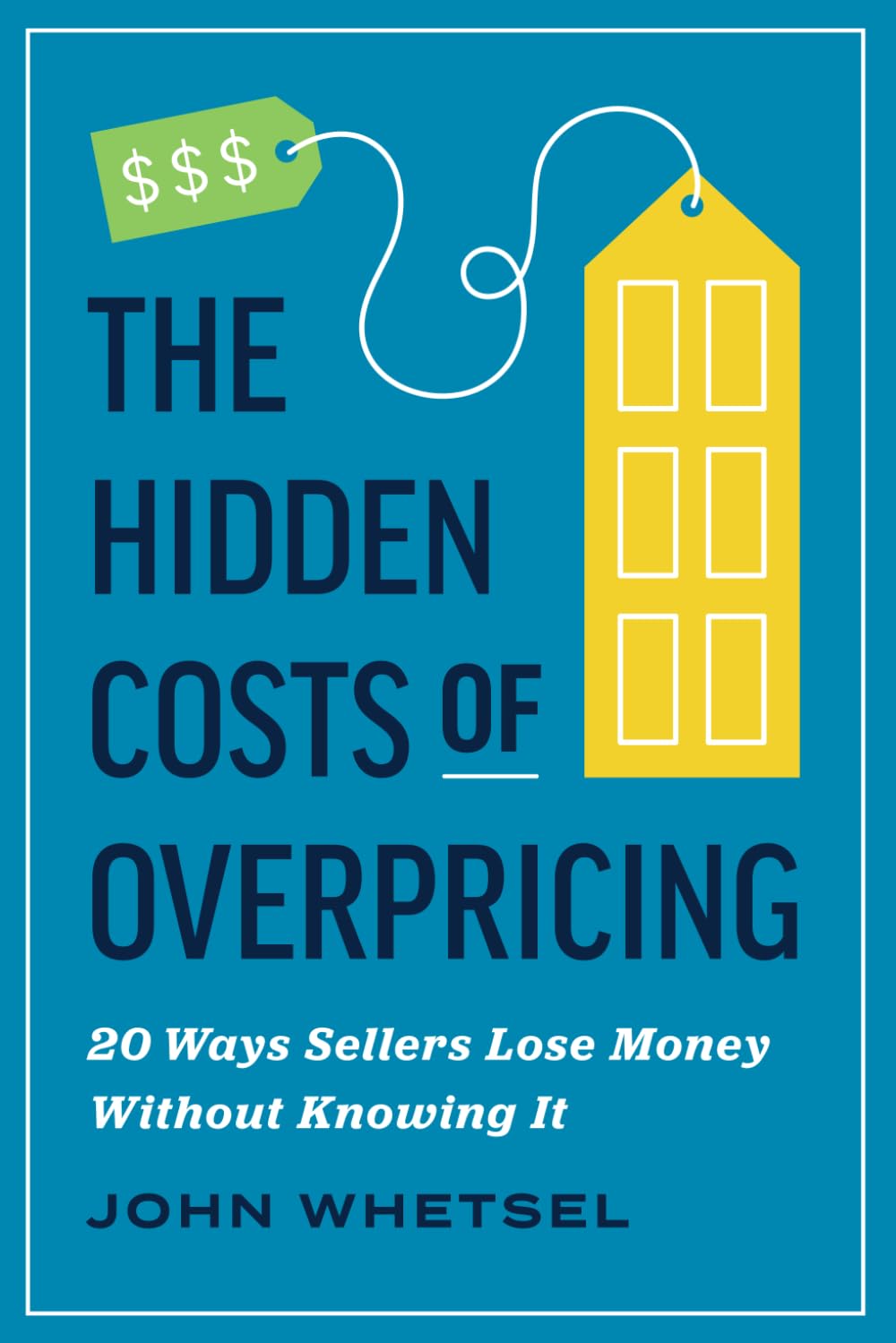
The Hidden Costs of Overpricing book cover
For Sellers

The Hidden Costs of Overpricing

20 Ways Sellers Lose Money Without Knowing It

The complete seller-side reference. Twenty specific ways an above-market list price costs the seller money in the negotiation that follows, in the price reductions that come, and in the time the home spends sitting on the market. Written for sellers who want to enter their listing with their eyes fully open.

Now Not Later book cover
For Buyers

Now, Not Later!

Making Confident Decisions for Your Next Chapter in Real Estate

The complete buyer-side reference. Written for the buyer who keeps waiting for the perfect moment, the right rate, or the next dip. The book that explains why most of the reasons people delay a purchase are not actually about price or timing, and what changes when the decision is finally made for the right reasons.

Agent Practice Assessment

Answer 15 questions. Receive your 10 personal focus areas from John's coaching framework, each one mapped directly to specific questions in the 195-question resource.

Ready to Build Your Practice on a Tested Framework?

I work with a limited number of agents at a time so that every coaching relationship receives the depth it deserves. The next step is a single conversation.

C
Call Directly
E
Email
S
Schedule a Discovery Call